How to Install GNOME Desktop on Ubuntu 24.04

This article explains how to install GNOME Desktop on Ubuntu 24.04.
GNOME Desktop is a user-friendly graphical interface designed for Unix-like operating systems, especially those based on Linux.
Why Install GNOME on Ubuntu 24.04 Server?
Many users start with a minimal Ubuntu Server installation to save resources. However, you may eventually need a graphical user interface (GUI) to run specific desktop apps or manage files visually. Installing GNOME provides a familiar desktop environment that makes system management easier for those who prefer windows and icons over the command line.
Prerequisites
Before you begin, ensure your system is up to date. Open your terminal and run these commands (requires admin privileges):
sudo apt update && sudo apt upgrade -y
Installation Variants: Minimal vs. Full
You have two main choices when you install GNOME Ubuntu 24.04. The ubuntu-desktop-minimal package installs only the core components, saving disk space and system resources. The full ubuntu-desktop package includes extra software like office suites and media players.
Option 1: Minimal Installation
sudo apt install ubuntu-desktop-minimal
Option 2: Full Installation
sudo apt install ubuntu-desktop
What Happens When Done?
Once the installation finishes, your system will include a display manager like gdm3. This handles your login screen. The system will also use xorg or wayland to render graphics. After a reboot, you will see a graphical login screen instead of a text-based prompt.
sudo reboot
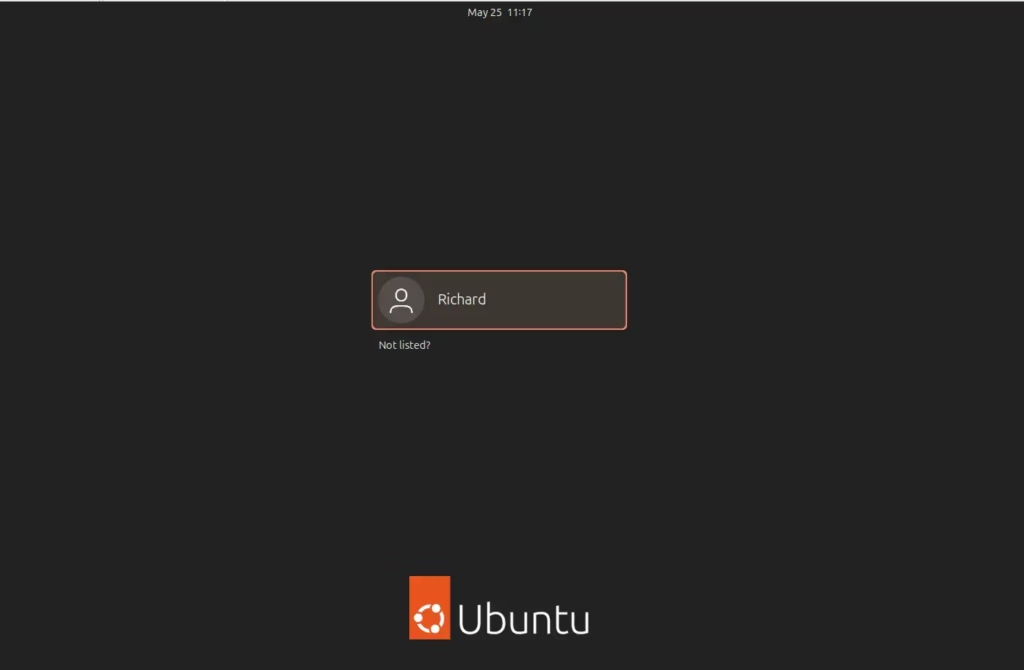
Ubuntu GNOME Desktop Login Screen
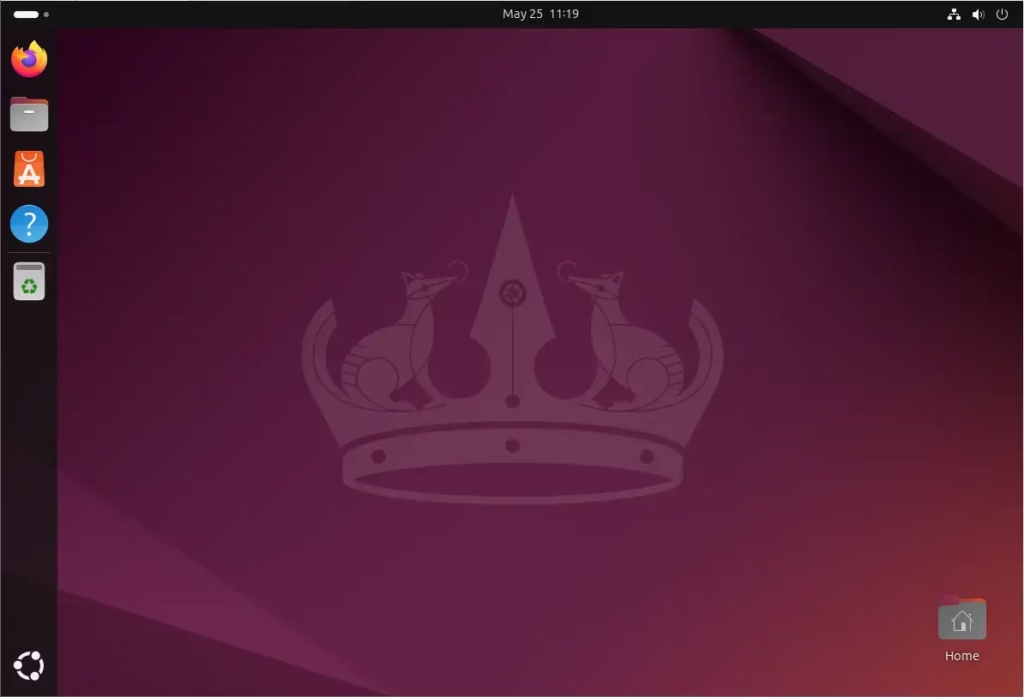
Ubuntu GNOME Desktop Environment
How to Switch Between GNOME and CLI
If you want to save resources, you can switch back to the command line (CLI) mode. Use this command to stop the graphical interface (requires admin privileges):
sudo systemctl set-default multi-user.target
To return to the GUI later, run:
sudo systemctl set-default graphical.target
Summary
Installing GNOME on Ubuntu 24.04 transforms your server into a user-friendly desktop. You can choose between a minimal or full installation based on your needs. Remember that a GUI uses more system resources, so monitor your performance after installation. You can easily toggle between CLI and GUI modes using systemctl commands whenever necessary.
Does installing GNOME slow down Ubuntu Server?
Yes, installing a GUI consumes extra RAM and CPU cycles. If your server has limited resources, the background processes required for GNOME may impact performance. For high-traffic servers, it is usually better to stick with the command line interface to ensure maximum efficiency and stability.
Can I uninstall GNOME if I no longer need it?
Yes, you can remove it. Use the command sudo apt purge ubuntu-desktop to remove the desktop environment. Follow this with sudo apt autoremove to clean up leftover packages. Be careful, as this may remove some system utilities that rely on graphical libraries.
Was this guide helpful?

Leave a Reply Cancel reply